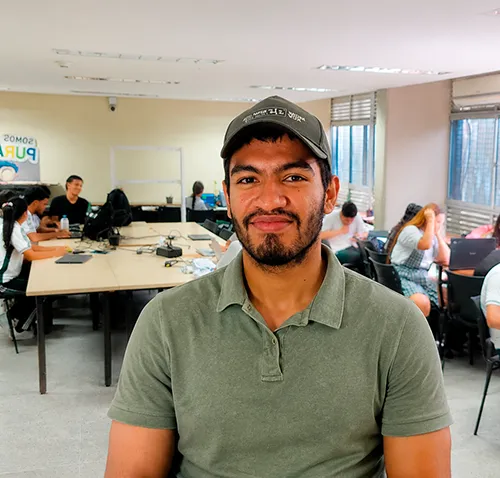
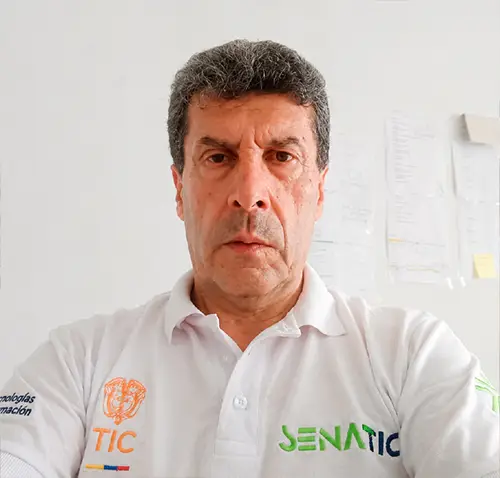
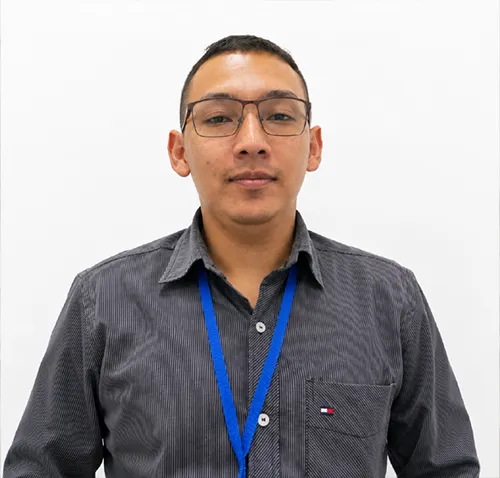
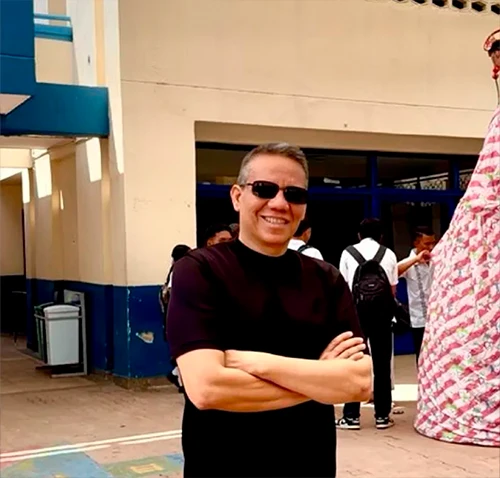
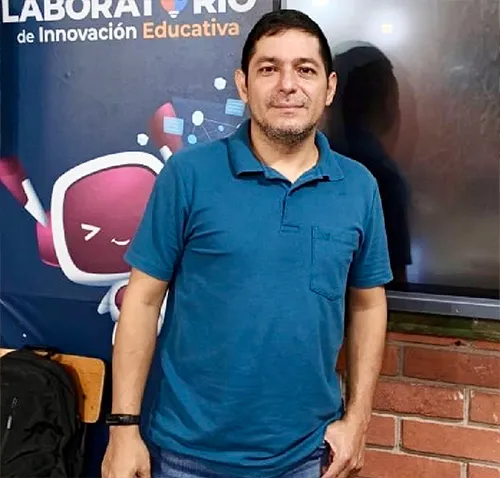
From Copacabana, Antioquia, Harry Machado supports upper secondary students in developing digital skills, convinced that learning technology today means expanding tomorrow’s opportunities.
Harry Machado Murillo was only ten years old when he realized he enjoyed explaining what he had learned to others. While helping classmates and children in his community with mathematics and other subjects, he discovered that teaching was about much more than sharing knowledge—it was a way of helping people recognize what they were capable of achieving.
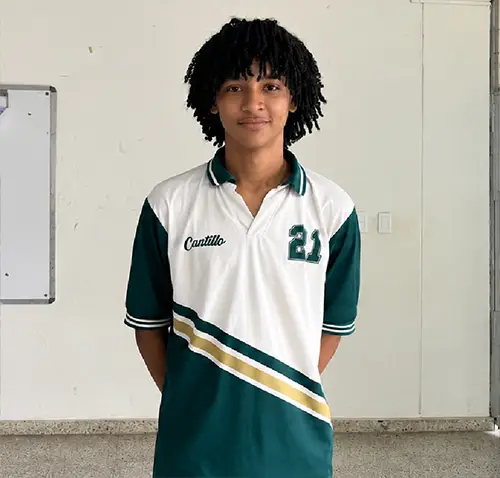
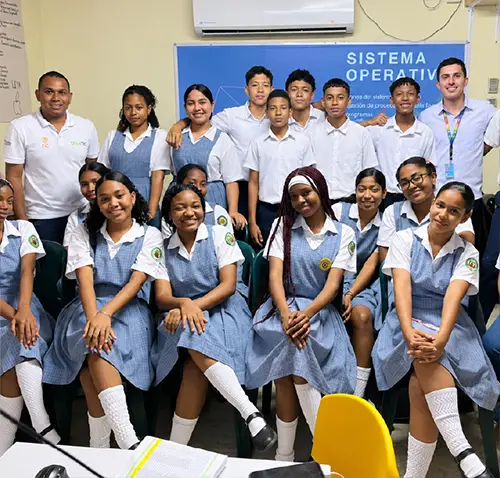
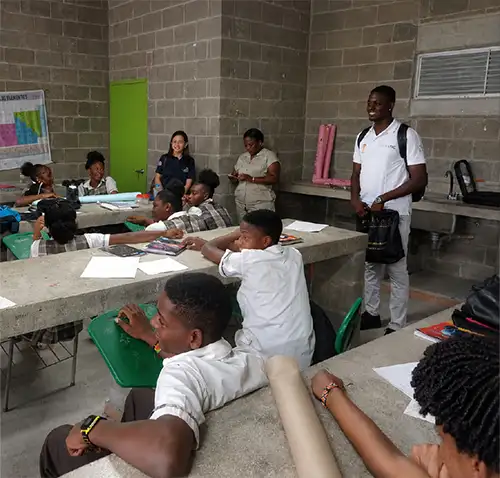
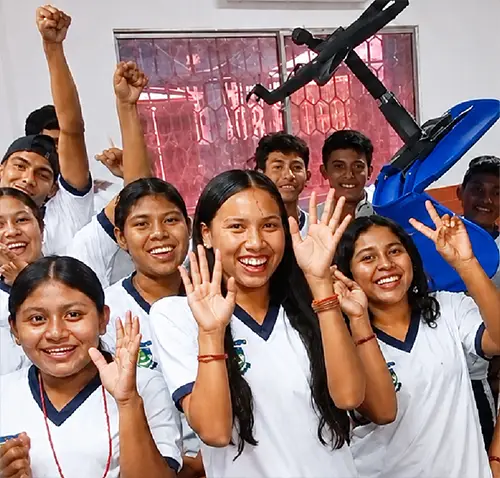
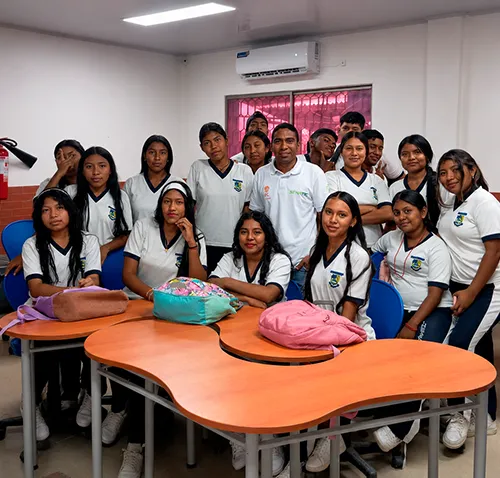
Today, that vocation comes to life in the classrooms of La Trinidad Educational Institution in Copacabana, where he works as a SENATIC instructor, guiding eleventh-grade students as they develop digital skills that can open new educational and employment opportunities.
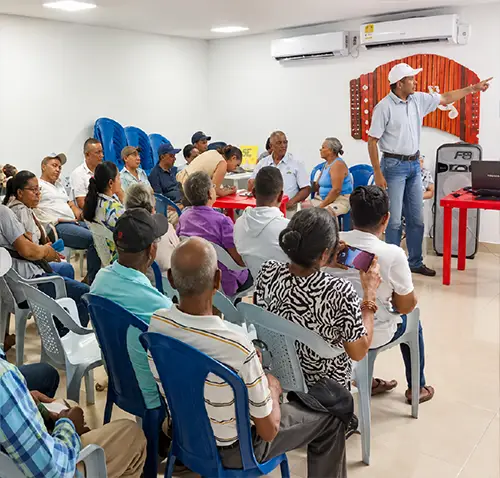
SENATIC is an initiative led by Colombia’s Ministry of Information and Communication Technologies (MinTIC), the National Learning Service (SENA) and the International Labour Organization (ILO) to strengthen the digital skills of upper secondary technical education students and support their transition to higher education and the world of work. The initiative currently reaches more than 1,100 educational institutions, has enrolled over 70,000 learners and has awarded more than 22,000 technical certifications during the first cohort of its integrated training programme.
A calling that began in the classroom
Although Harry was born in Zaragoza, Antioquia, he grew up in Quibdó, Chocó, where he spent much of his childhood and youth.
It was there that he discovered how much he enjoyed supporting the learning journey of others.
"From a very young age, I realized I had a natural ability to explain things to children and young people. Communicating with them always came easily to me, and I began to think that teaching could become part of my life’s purpose," he recalls.she recalls.
Con esa motivación decidió estudiar Ingeniería en Telecomunicaciones e Informática. Durante su formación encontró un campo que combinaba dos de sus mayores intereses: la tecnología y la posibilidad de compartir conocimiento.
Later, he furthered his professional development by specializing in Technology Infrastructure Management, convinced that lifelong learning is essential in a constantly evolving sector.
Bringing technology into the real world
Harry joined SENATIC after coming across a call for instructors on social media.
Shortly afterwards, he began working with students at La Trinidad Educational Institution, where he took on the challenge of teaching software development.
The first few months were not easy. He inherited groups that had gone through previous training processes and needed to rebuild their trust in both the learning experience and the guidance provided by their instructors.
Through patience and a close, supportive approach, he gradually built relationships based on mutual respect and a shared commitment to learning.
"Over time, the students came to understand my teaching style and began to trust me. Today, we work together with great respect and a genuine desire to learn from one another," he explains.she explains.