Sharick found in technology a tool to transform her future through an ILO-supported project
The experience of a student from Cartagena shows how access to digital skills training can strengthen confidence, inspire new interests and expand opportunities for younger generations.
CARTAGENA, Colombia (ILO News) – Until recently, Sharick Quintero Rodríguez thought that developing an application was something reserved for experts or people with significant resources. Today, at just 16 years old, she is working with her classmates on the design of an application and speaks naturally about artificial intelligence, innovation and the role of technology in solving problems in her community.
That change began when she joined the SENATIC project.
“It has been a very interesting experience. I have learned about topics that I did not even know existed before. I thought that developing an application was something reserved for people with a lot of resources or very advanced studies, but here I discovered that I can do it too,” she says.
Born in Cartagena and raised in a family environment that has always supported her dreams, Sharick found much more than new knowledge through digital skills training. She discovered an opportunity to strengthen her confidence, learn to work as part of a team and develop skills that she now considers essential for any life project.
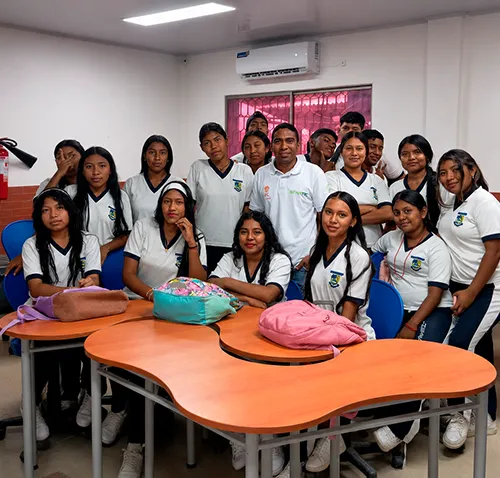
She is currently working with other students on the creation of an application as part of her training. For her, the project represents an opportunity to see that innovation can also emerge from the classroom.
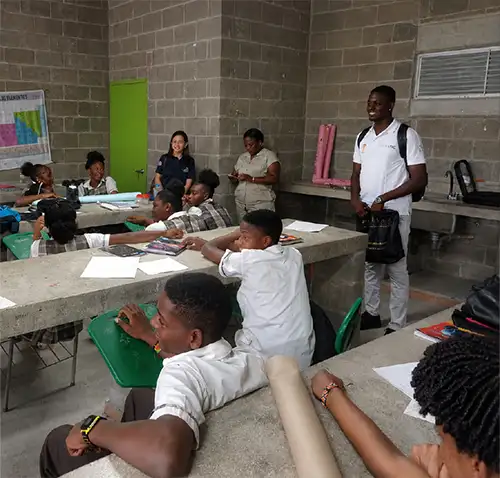
Much of this experience has been accompanied by the continued support of her instructor.
“He always makes sure that we understand each topic. If we have questions, he explains it again, uses examples and keeps an eye on each group throughout the projects. He never leaves us on our own when a problem comes up.”
Sharick understands that the world of work is changing rapidly and that digital skills will be essential across professions.
“The world is changing very quickly and we need to learn how to adapt. It is important that we learn about new technologies at school so that we are ready for what is to come.”
This is precisely the purpose of SENATIC, an initiative developed by the Ministry of Information and Communications Technologies, SENA and the International Labour Organization (ILO) to strengthen digital skills and prepare talent to respond to changes in the labour market.
Through this partnership, the project has strengthened the digital skills of more than 691,000 people and aims to train 302,000 people in digital skills and information technology skills. Under the Technical Secondary Education articulation component, more than 1,100 educational institutions are also participating, with more than 70,000 learners enrolled and over 22,000 technical certifications awarded during the first cohort.
But technology is not Sharick’s only passion.
In her free time, she plays the guitar and piano, sings, dances, skates and takes part in cultural activities. She also enjoys cooking with her family and experimenting with new recipes.
“I like learning new things and sharing those moments with my parents. We cook, watch films and enjoy spending time together,” she says.
Although she has not yet decided which career she will pursue, she acknowledges that her experience with SENATIC has sparked an unexpected interest in artificial intelligence and its applications to improve people’s lives.
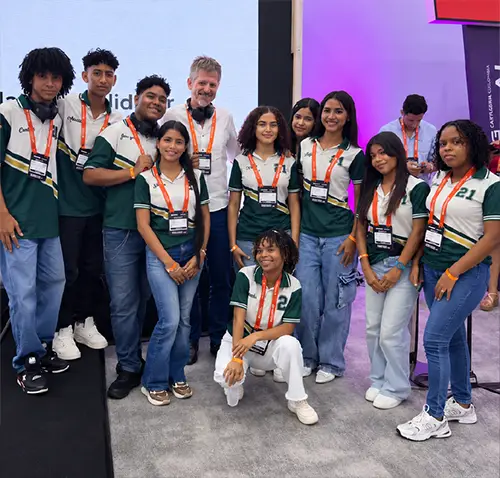
This interest grew during her participation in ANDICOM, where she had the opportunity to learn more about technological trends and interact with other young people and professionals from the sector.
“That is where I understood that artificial intelligence can help our communities, schools, homes and many aspects of everyday life. I would like to learn more and take part in projects that can really make an impact.”
The experience has also strengthened another skill that she considers equally important: communication. “I have worked a lot on the way I speak and communicate. Little by little, I have learned to express myself better and interact with people with greater confidence,” she says.
Today, she sees the same enthusiasm among her fellow trainees.
“It is a very committed group. Everyone arrives on time, takes part, completes their projects and is eager to learn.”
Before ending the conversation, Sharick shares a message for other young people who, like her, have the opportunity to access this type of training.
“Make the most of this opportunity, be responsible and work hard. There are many people who would like to have the opportunity to learn everything that we are learning. It is worth giving your best in every activity and every project.”
Sharick’s story shows that vocational training does more than develop technical skills. It also strengthens confidence, encourages creativity and helps people discover new possibilities for building their future. In a world where digital skills are becoming increasingly important, opportunities such as SENATIC can help more young people prepare to participate in a changing economy and access better employment opportunities.

Through this partnership, the project has strengthened the digital skills of more than 691,000 people and aims to train 302,000 people in digital skills and information technology skills. Under the Technical Secondary Education articulation component, more than 1,100 educational institutions are also participating, with more than 70,000 learners enrolled and over 22,000 technical certifications awarded during the first cohort.
But technology is not Sharick’s only passion.
In her free time, she plays the guitar and piano, sings, dances, skates and takes part in cultural activities. She also enjoys cooking with her family and experimenting with new recipes.
“I like learning new things and sharing those moments with my parents. We cook, watch films and enjoy spending time together,” she says.
Although she has not yet decided which career she will pursue, she acknowledges that her experience with SENATIC has sparked an unexpected interest in artificial intelligence and its applications to improve people’s lives.
This interest grew during her participation in ANDICOM, where she had the opportunity to learn more about technological trends and interact with other young people and professionals from the sector.
“That is where I understood that artificial intelligence can help our communities, schools, homes and many aspects of everyday life. I would like to learn more and take part in projects that can really make an impact.”
The experience has also strengthened another skill that she considers equally important: communication. “I have worked a lot on the way I speak and communicate. Little by little, I have learned to express myself better and interact with people with greater confidence,” she says.
Today, she sees the same enthusiasm among her fellow trainees.
“It is a very committed group. Everyone arrives on time, takes part, completes their projects and is eager to learn.”
Before ending the conversation, Sharick shares a message for other young people who, like her, have the opportunity to access this type of training.
“Make the most of this opportunity, be responsible and work hard. There are many people who would like to have the opportunity to learn everything that we are learning. It is worth giving your best in every activity and every project.”
Sharick’s story shows that vocational training does more than develop technical skills. It also strengthens confidence, encourages creativity and helps people discover new possibilities for building their future. In a world where digital skills are becoming increasingly important, opportunities such as SENATIC can help more young people prepare to participate in a changing economy and access better employment opportunities.
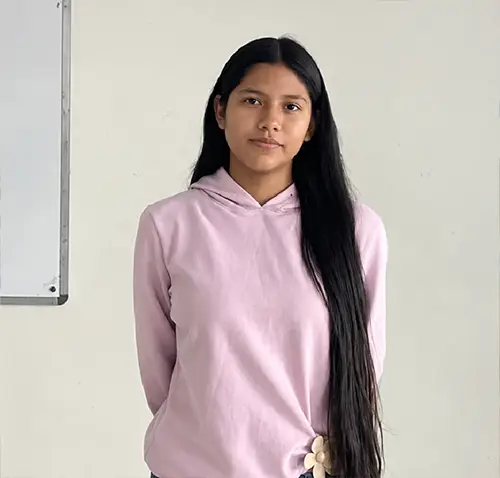
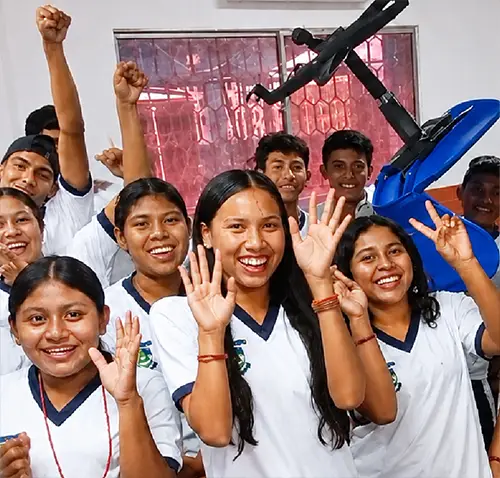
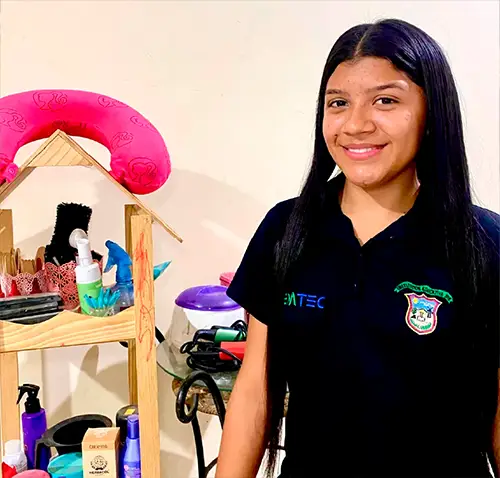
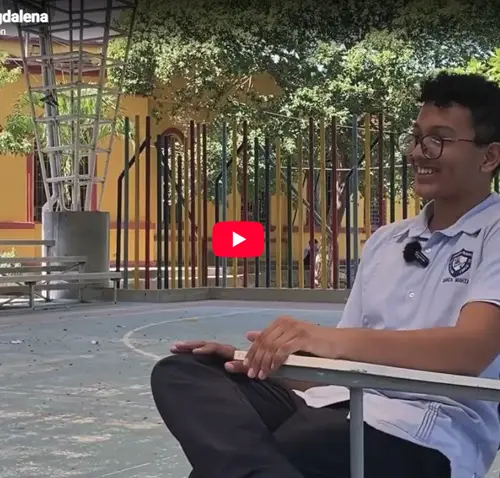
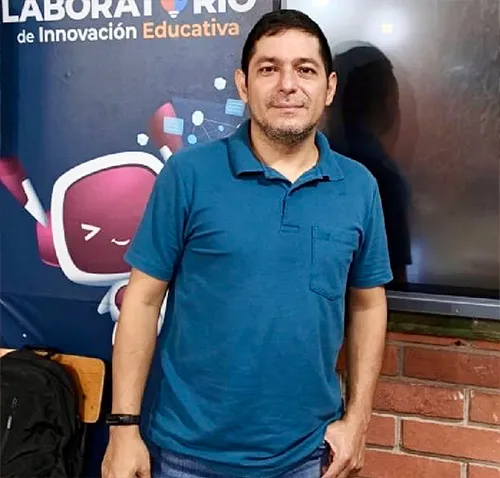
Student participating in the SENATIC project during a digital skills training session at an educational institution in Cartagena.