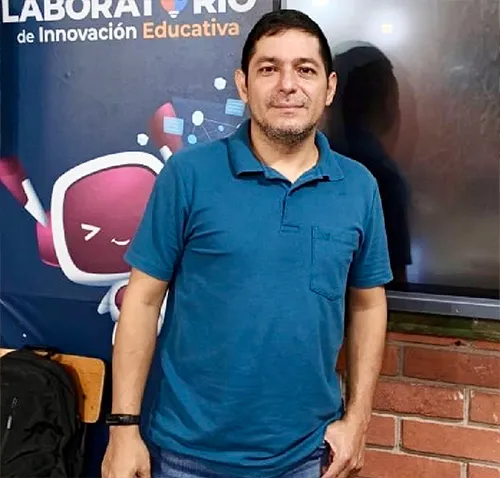
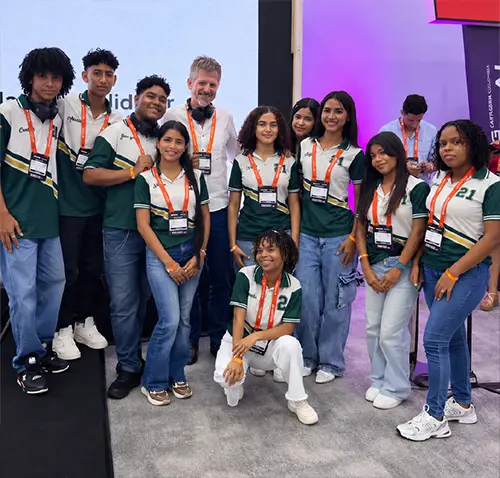
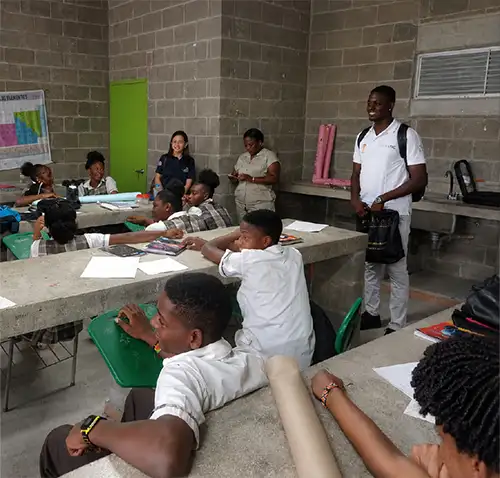
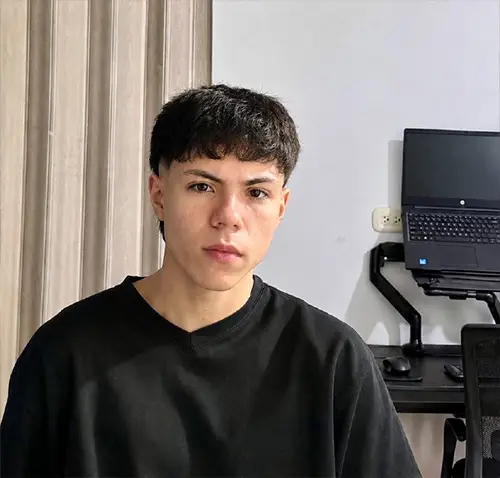
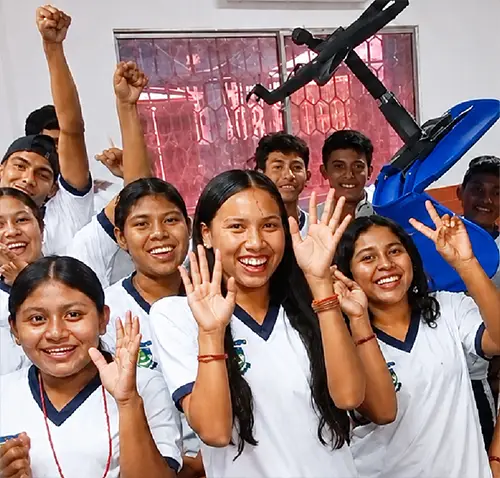
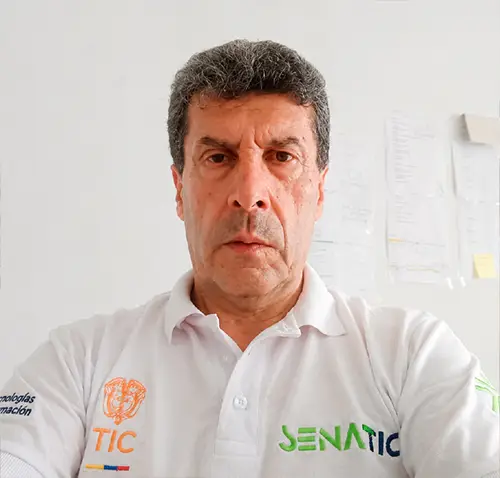
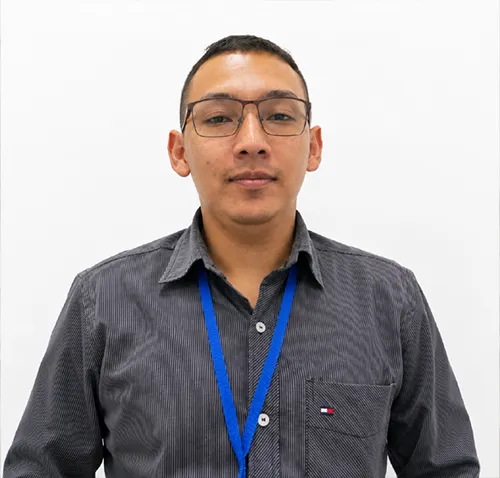
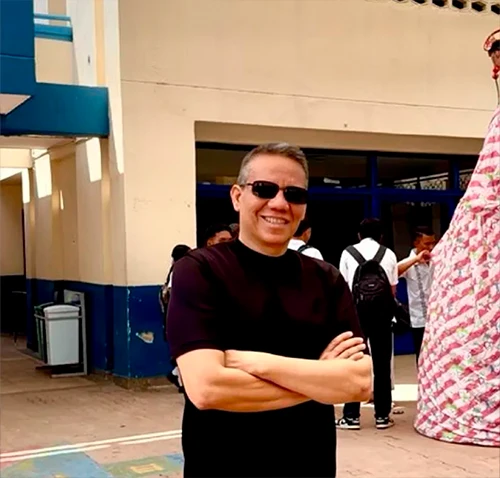
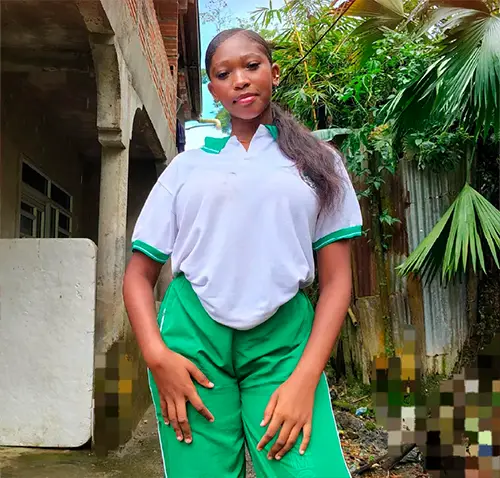
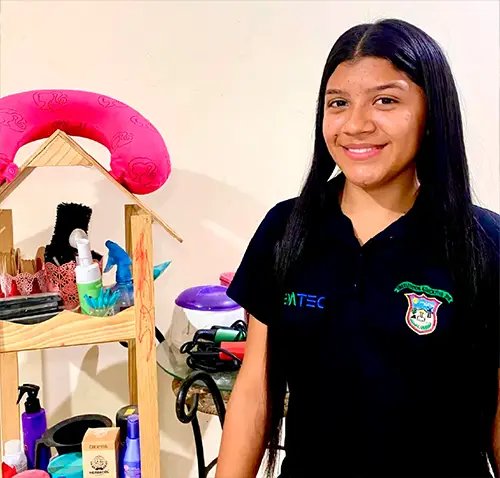
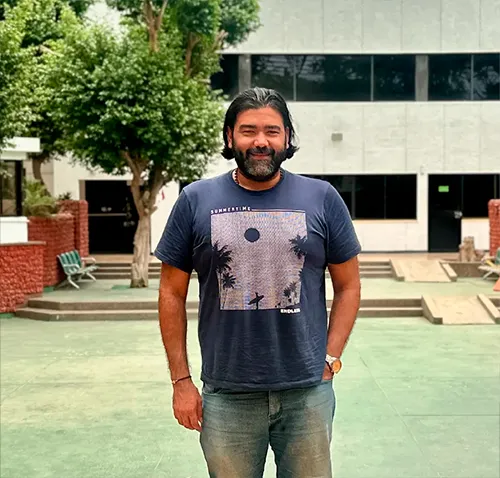
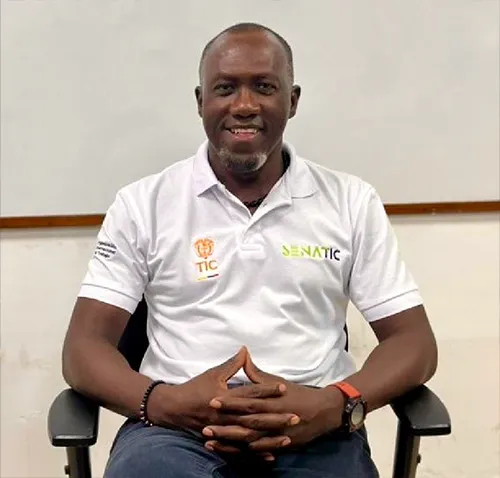
From the mountains of Bucaramanga, with roots in the warm and quiet land of Gamarra, Javier Quintero has made teaching his life project and technology a tool to transform the present of hundreds of young people. His commitment to technical education, within the framework of the SENATIC project, is also an act of hope for a fairer Colombia with more opportunities.
Javier Enrique Quintero Rojas was born 45 years ago in Gamarra, a small town on the banks of the Magdalena River, in the southern part of the Cesar department. At that time, Gamarra had limited development opportunities but preserved an intangible richness that remains in his memory: close knit families, unhurried time, street games on dirt roads, and the voices of grandparents through the walls. It was a place where everyone knew each other by name, and stories were woven among shared patios and simple snacks.
His childhood, though marked by material hardship, was deeply joyful. He lived with his parents and sister, embraced by a community that treated him as one of their own. On one side lived his paternal grandparents, on the other, his maternal ones. He grew up surrounded by affection and family companionship, and it was there in that small but warm world that his earliest ideas of what it means to support, teach and care began to take shape.
At 16, he left his hometown to pursue his studies. Nearly three decades have since passed in Bucaramanga, the city that welcomed him and where he has built both his professional career and his family life. He has been married for 22 years to a healthcare professional and is the father of four children. An electronic engineer by training, he holds a specialisation in learning environments and a master’s degree in telematics focused on academic processes. But beyond his credentials, what defines him is a simple phrase: “I love being a teacher.”
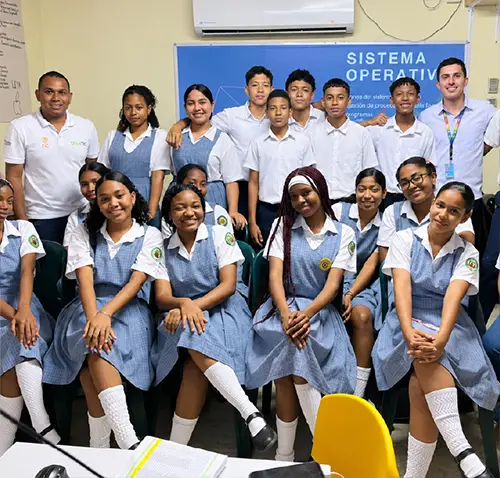
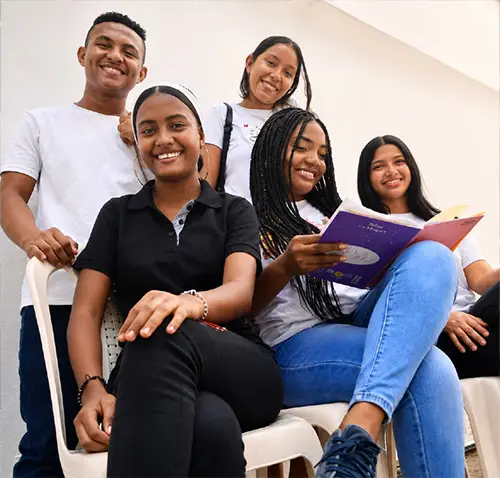
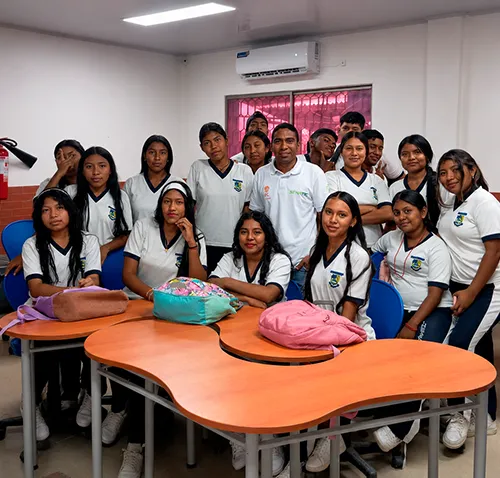
For the past 20 years, he has dedicated himself to education, especially at the upper secondary level. His journey has taken him to rural areas such as Puerto Wilches, along the Magdalena River, and to technical institutions like the Unidades Tecnológicas de Santander. Since 2018, he has been a teacher at the Oriente Miraflores Educational Institution, located in the Morrorico neighbourhood Comuna 14 of Bucaramanga a district facing deep social challenges but home to a resilient, cheerful, and high-potential community.
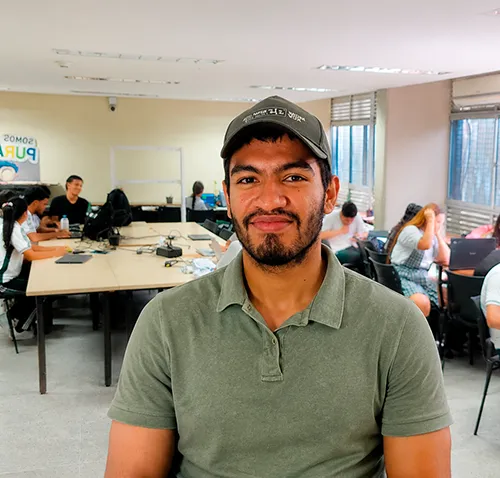
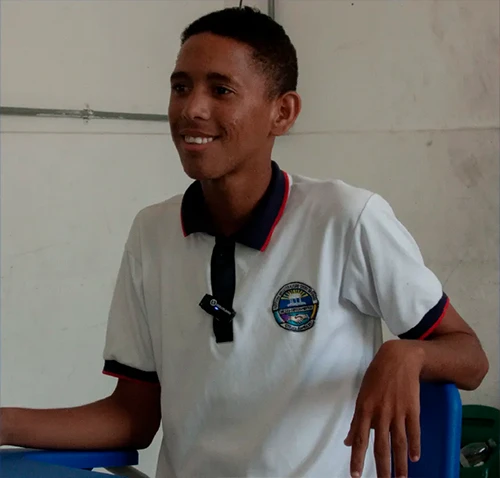
For Javier, the school is a refuge an oasis that protects young people from the dynamics of violence, substance abuse, or school dropout that sometimes surround them. He is committed not only to teaching software programming within the SENATIC project but also to listening, motivating, and guiding his students. He has worked closely with young people with cognitive disabilities and autism spectrum disorders, firmly believing that education — when it is humane and patient can be the most powerful tool against any form of exclusion.
Through SENATIC, he has found a pathway to deep transformation. At first, many students were hesitant, but he won them over with an honest promise: