SENATIC: the opportunity that changed the course of a student's life in Colombia's Caribbean region

What began as a graduation requirement ultimately became a vocation. The experience of a student from Cartagena shows how training in digital skills can open up new opportunities for young people in Colombia.

CARTAGENA, Colombia (ILO News) – When Jeiner Alejandro Cantillo Suárez chose programming as part of his school education, he did so without any particular expectations. For him, it was simply one of the options available to fulfil an academic requirement. He never imagined that this decision would mark the beginning of a new life project.

Today, the young man from Cartagena speaks enthusiastically about software development, innovation and the potential of technology to transform society. What changed the way he sees his future was his participation in SENATIC, an initiative that enabled him to discover skills he did not know he had and to develop a vocation that he now hopes to turn into a profession.

“I started out thinking it was just another programme, but little by little I realised that it was opening up many opportunities for me. I discovered something I really enjoy and that I want to continue studying once I finish school.”

Jeiner was born and raised in the San José de los Campanos neighbourhood of Cartagena. He lives with his mother, stepfather and sister, who have supported him throughout his achievements and have been a constant source of support during his training.

As he progressed through the classes, he came to understand that programming meant much more than learning a programming language. He discovered a different way of analysing problems, finding solutions and preparing for a world of work in which digital skills are becoming increasingly important.

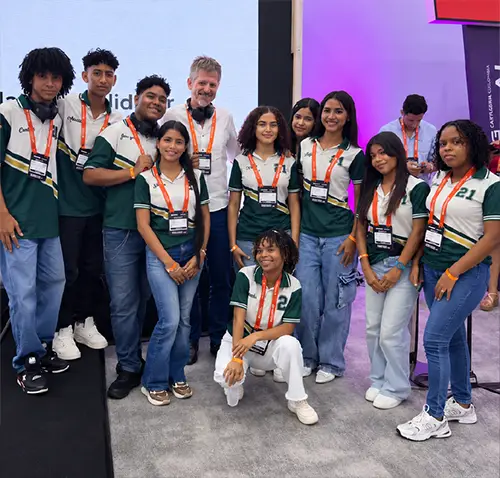
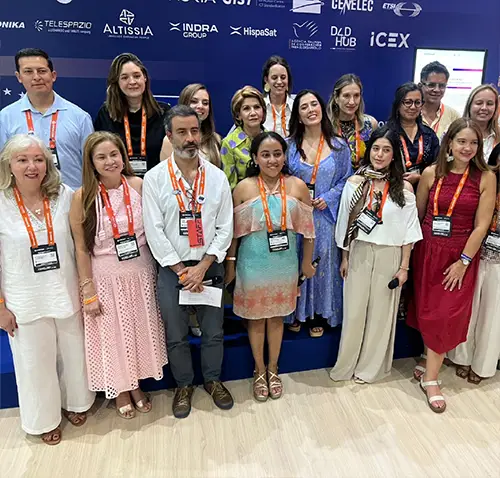
One of the experiences that most transformed his outlook came when he attended ANDICOM, Latin America's leading technology and telecommunications congress, as one of the students invited by SENATIC.

Walking through the event and seeing first-hand the innovations developed by technology companies helped him understand that what he was learning in the classroom had real-world applications.

“I had always seen robots in films or on television. Seeing them working right in front of me was impressive. I was really interested in understanding how they worked and everything they were capable of doing,” he says.
From then on, he began to see technology from a different perspective.

“Technology is present in everything we do. Today, it is used to study, work, carry out administrative procedures, communicate and solve problems. That is why I believe that learning about it is essential.”

Jeiner's experience is part of the results achieved by SENATIC, una alianza entre el Ministry of Information and Communications Technologies, SENA and the International Labour Organization (ILO) to strengthen digital skills and prepare talent to respond to transformations in the labour market.

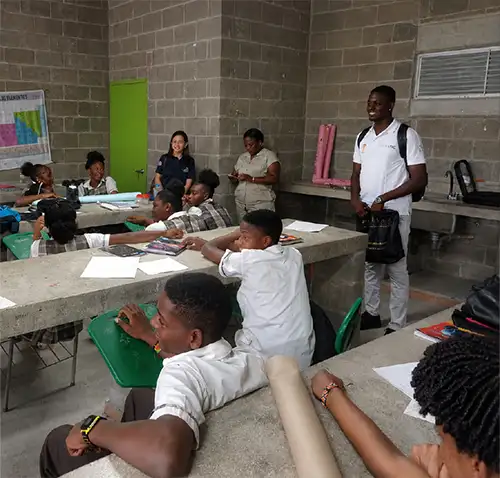
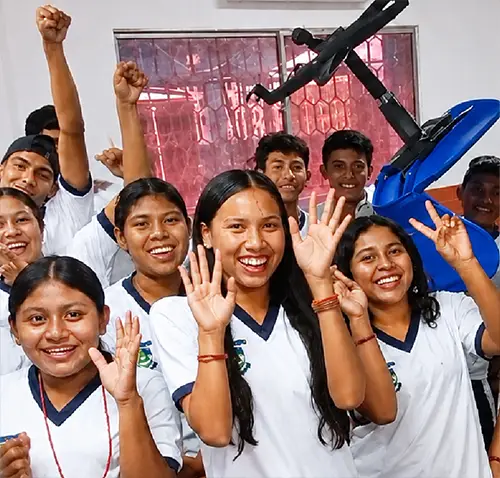
The project has strengthened the digital skills of more than 691,000 people and aims to train 302,000 people in digital skills and information technology skills. Under the Technical Upper Secondary Education pathway, more than 1,100 educational institutions are participating, with more than 70,000 students enrolled and more than 22,000 technical certifications awarded during the first cohort.

Outside the classroom, Jeiner enjoys spending time with his family and friends. He often accompanies his stepfather in maintenance and repair work on refrigeration and air-conditioning systems, an experience that has also taught him to value hard work, discipline and practical learning.

“When I have free time, I go to work with him. Little by little, I have learned about maintaining air-conditioning equipment, and I enjoy helping him whenever I can.”

Today, however, he is clear that his future lies in software development.

“When I was in tenth grade, I chose programming because it was an option for graduating. I knew absolutely nothing about it. Today, I realise that it is something I am truly passionate about and that it can open up many opportunities for me in the future.”

For him, learning to programme means developing the skills needed to meet the challenges of an increasingly digitalised economy and expanding his opportunities to access decent work.

Jeiner has a message for other young people who are embarking on the same journey: “Make the most of this opportunity. Technology opens many doors for us because we live in a world where it is becoming increasingly important every day. All we have to do is work hard, keep moving forward and not give up.”

Jeiner's story shows that access to vocational training can transform much more than technical skills. It can also build confidence, help young people discover new career paths and provide them with the tools to build a life project. In a context where digital transformation is reshaping the world of work, experiences such as his demonstrate how education and the right opportunities can open new horizons for young people in Colombia.

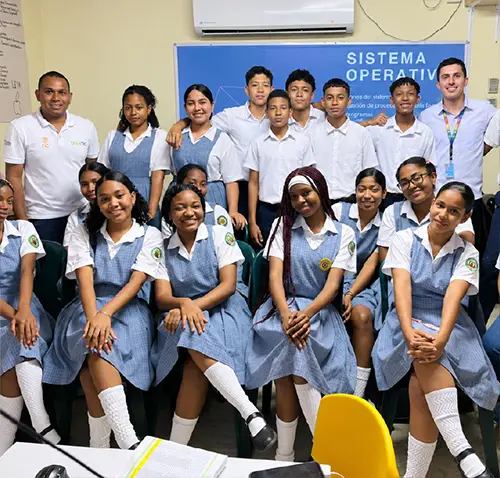
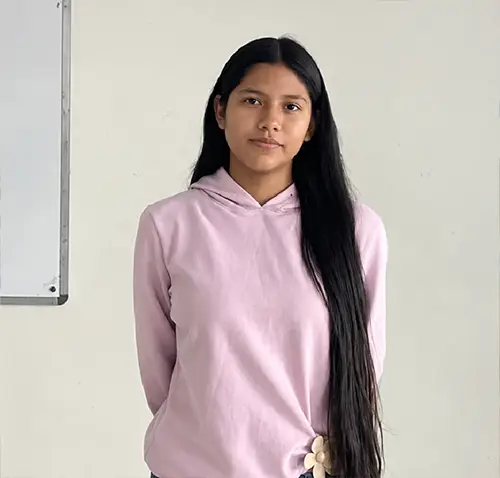
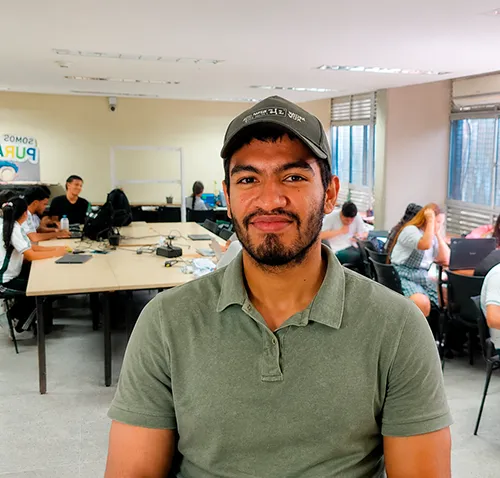
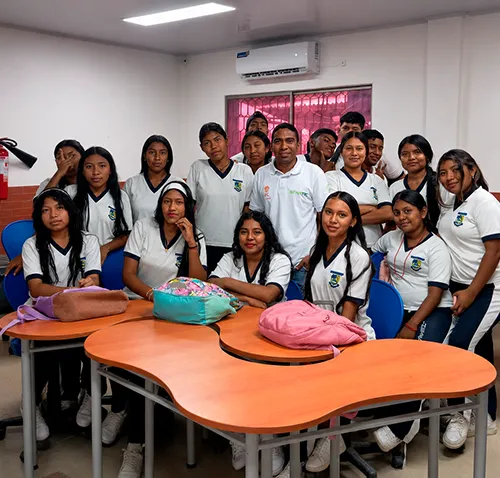
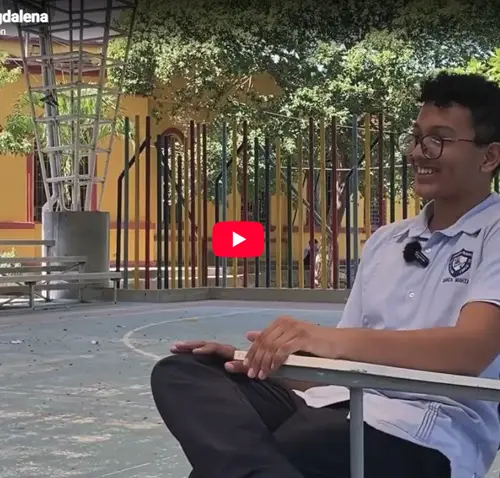
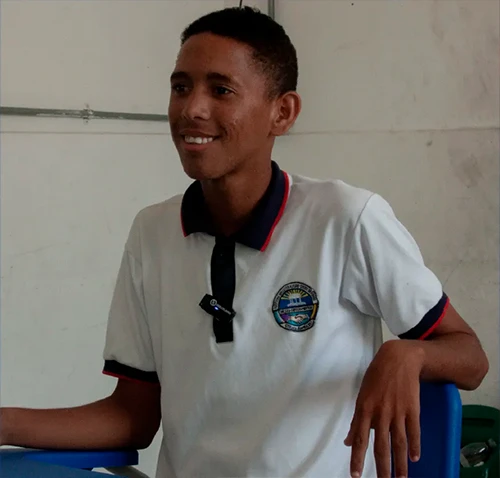
Jeiner Alejandro Cantillo Suárez, estudiante del proyecto SENATIC, durante una jornada de formación en competencias digitales en su institución educativa en Cartagena, Colombia.
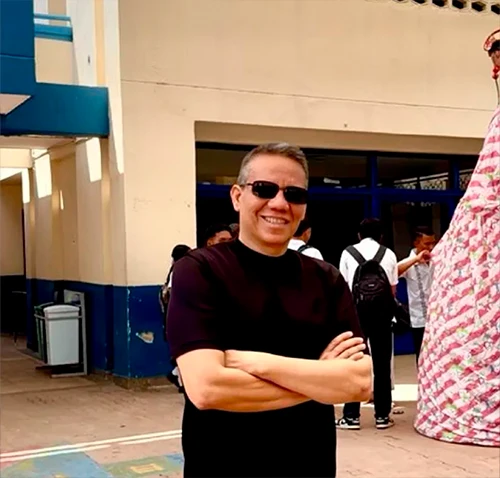
Jeiner Alejandro Cantillo Suárez, a student participating in the SENATIC project, during a digital skills training session at his educational institution in Cartagena, Colombia.
Scroll to Top