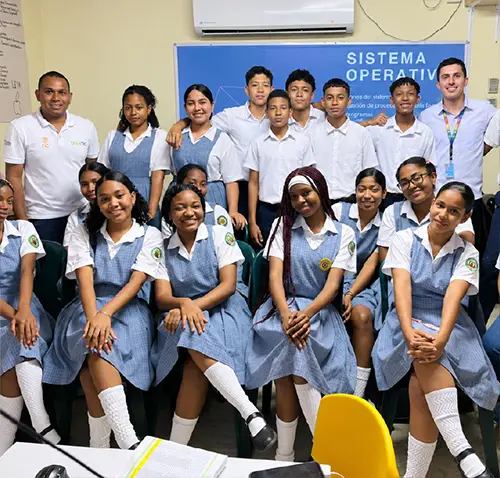
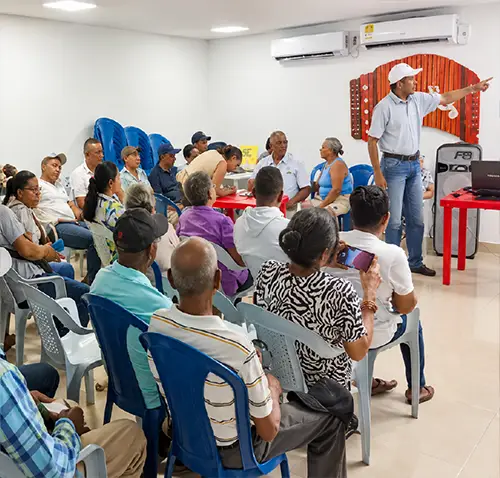
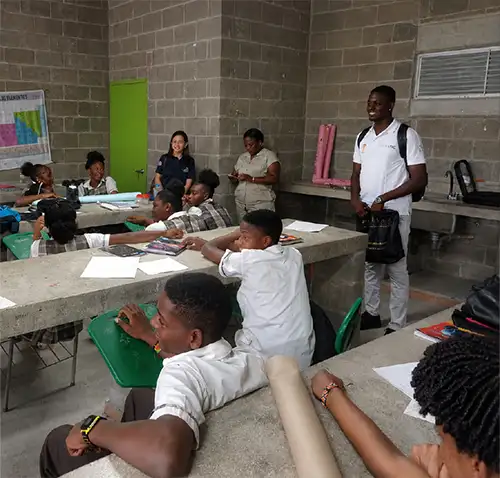
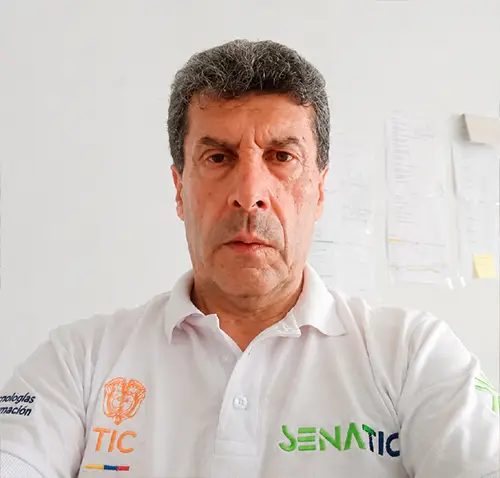
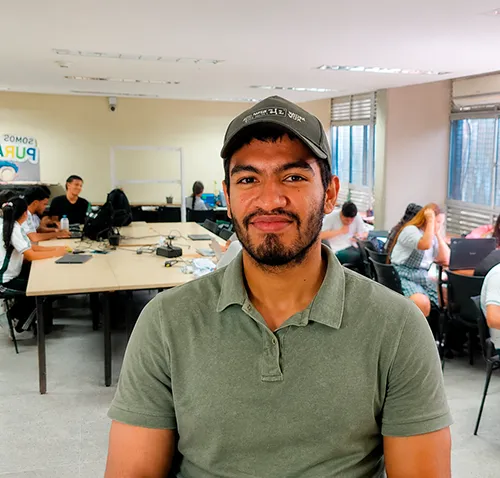
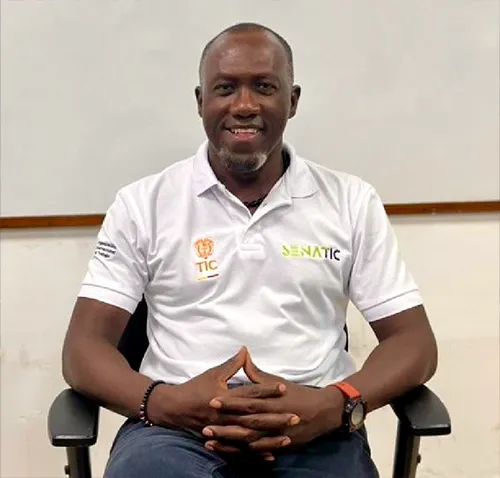
From Cartagena, this SENATIC project instructor supports young people in developing digital skills that strengthen their employability and enable them to envision a future with greater opportunities.
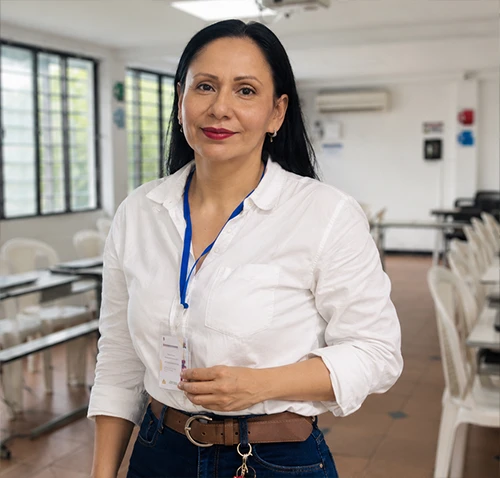
CARTAGENA, Colombia (GOYA Noticias) – When Adolfo Herrera Caicedo recalls the moment he first became passionate about technology, he does not think of a classroom or a university. He thinks of the first computer that arrived at his home when he was fifteen. It was a desktop computer with a white monitor that sparked his curiosity from the very beginning.
“From that moment, I fell in love with technology. I wanted to understand how it worked, and I knew that I wanted to dedicate my life to that world,” he recalls.
That discovery set the course for his life. Born and raised in Cartagena, he decided to study Systems Engineering and, before graduating, was already working in technology training. Today, after more than twelve years as an instructor, he is convinced that teaching goes far beyond transmitting technical knowledge.
His experience found a new purpose through SENATIC, an initiative developed by the Ministry of Information and Communications Technologies (MinTIC), SENA and the International Labour Organization (ILO), which seeks to strengthen digital skills and prepare talent to respond to changes in the world of work.
“The most rewarding thing about the project is reaching students who had never had access to this type of training. Many of them had never designed a website or used digital tools professionally,” he explains.
In a city where inequalities in access to connectivity and technology education persist, Adolfo believes that teaching programming means opening up opportunities that once seemed out of reach.
“When a student discovers that they can create a website or develop a digital project, they begin to imagine a different future. It changes the way they see themselves.”
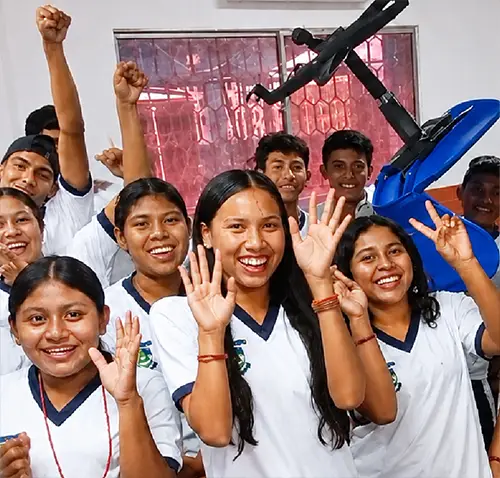
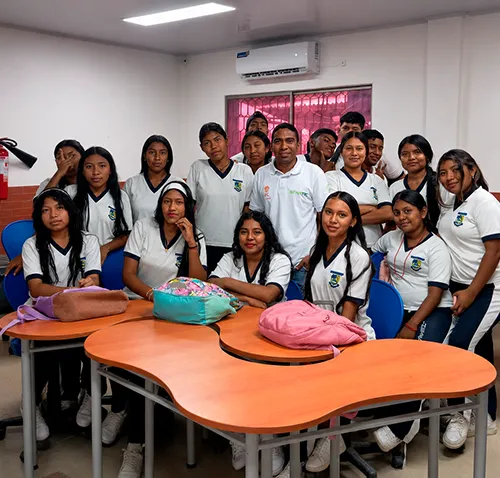
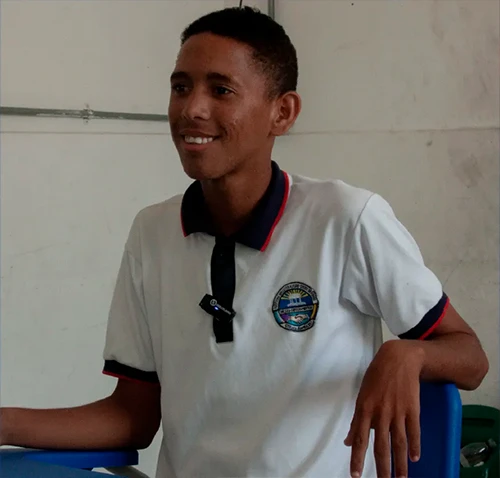
At Mercedes Ábrego Educational Institution in Cartagena, his students began by developing websites as part of their productive projects. However, an experience outside the classroom transformed their perspective on technology.
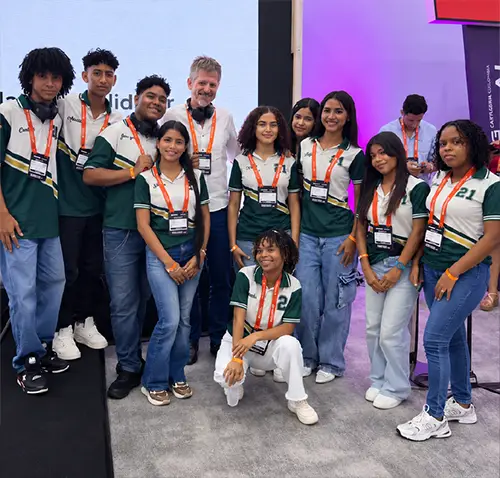
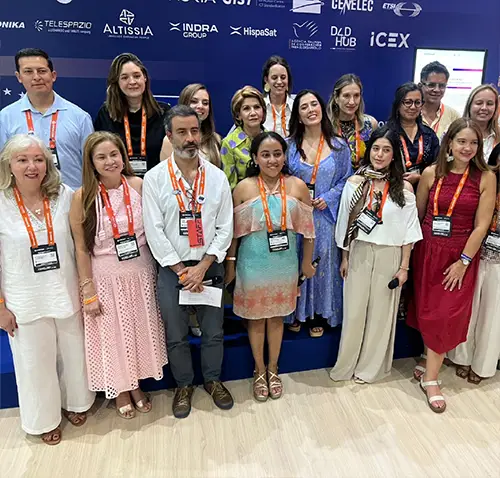
After his learners took part in a conference on artificial intelligence, they began incorporating new tools to create videos, design graphics and strengthen the content of their digital projects.
“It was impressive to see new skills emerge. They discovered that artificial intelligence does not replace creativity; on the contrary, it allows them to develop it much further,” he says.
For Adolfo, these advances reflect an increasingly evident reality: digital skills are now among the essential skills needed to enter and remain in the labour market. “Today, every profession requires knowledge of technology. It does not matter whether a student wants to become a doctor, a lawyer or an engineer. Knowing how to use digital tools is no longer an added value; it is a necessity.”
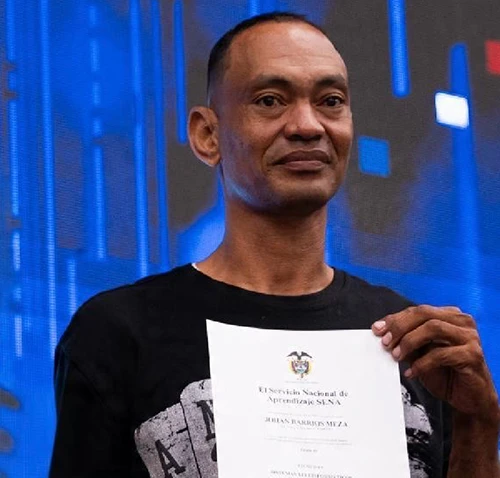
That is precisely the purpose of SENATIC. Through the partnership between the Ministry of Information and Communications Technologies (MinTIC), SENA and the ILO, the project has strengthened the digital skills of more than 691,000 people and aims to train 302,000 people in digital skills and information technology skills. Under the Technical Secondary Education Articulation component, more than 1,100 educational institutions are already participating, with more than 70,000 learners enrolled and more than 22,000 technical certifications awarded in the first cohort.
However, for Adolfo, the programme’s greatest impact cannot be measured in figures alone.