From a rural village in Caloto, in the department of Cauca, this student demonstrates how digital skills training can open up new opportunities, even in places where distance and connectivity pose major challenges.
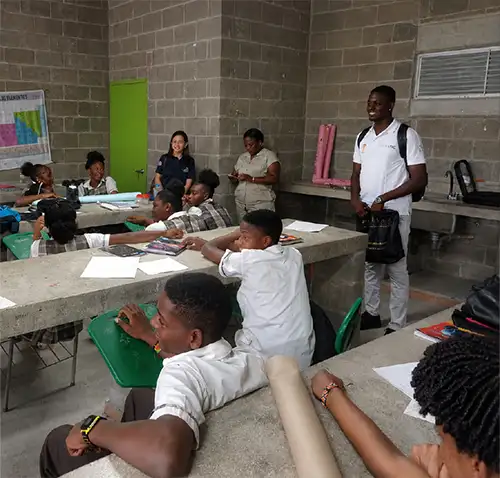
CALOTO, Cauca (GOYA News) – Every morning, before starting her school day, Nicoll Andrea Trochez sets out on a journey of almost 40 minutes from the rural village where she lives to the Escipión Jaramillo Educational Institution. When the transport reaches the end of its route, she still has to walk part of the way to school. For her, the journey is not a difficulty: it is the path that brings her closer to her life goals.
Born in Santander de Quilichao and raised in a rural area of the municipality of Caloto, Nicoll grew up surrounded by mountains, sugar cane fields and a community where families largely depend on agricultural work. Her parents have devoted their lives to working the land and, thanks to their support, she has been able to focus on her studies and build a different future.
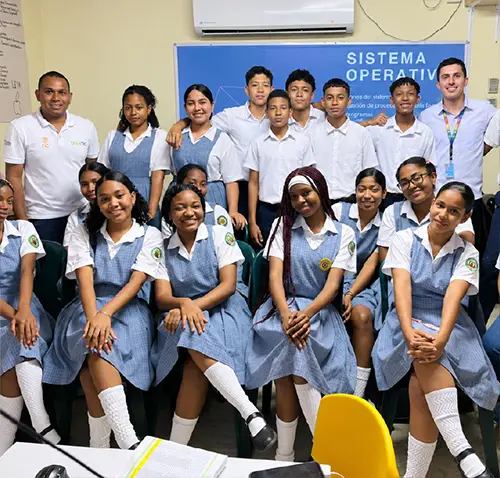
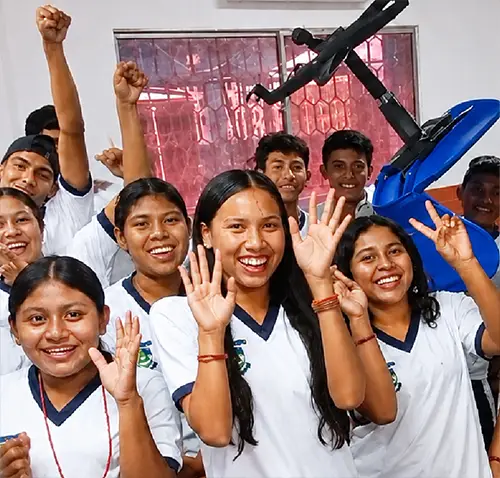
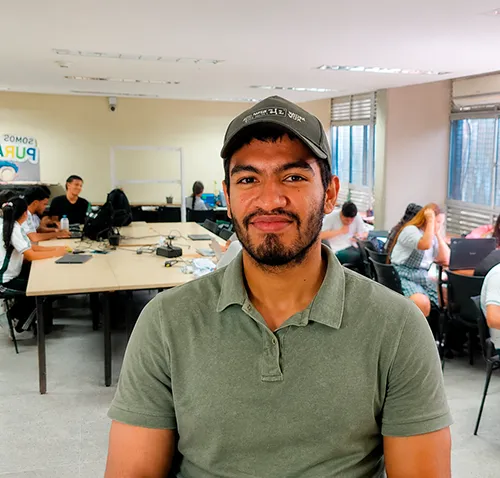
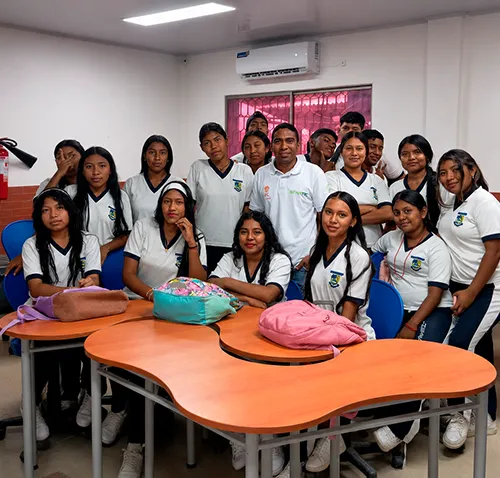
That future began to take shape when she joined SENATIC, an initiative developed by the Ministry of Information and Communications Technologies (MinTIC), SENA and the International Labour Organization (ILO), which seeks to strengthen digital skills and prepare people to respond to changes in the world of work.
“I have really enjoyed everything we have learned. Thanks to our teacher Álvaro, we have discovered new things about software development and technology,” says Nicoll.
For many students at her school, learning programming means overcoming barriers that extend beyond the classroom. In nearby rural areas, access to the internet remains limited, and having a computer at home is still the exception.
“More than 90 per cent of us do not have a computer and we barely have internet access either. That is why we make the most of our time at school. We work throughout the school day because we know that, once we get home, we cannot always continue,” she explains.
Far from becoming an obstacle, these limitations have strengthened her commitment to learning. Each training session is an opportunity to acquire knowledge that she considers essential for any profession.
“Technology is important because it allows us to do things faster and learn how to solve problems on our own, without always having to rely on other people’s help,” she says.
Her biggest dream, however, lies far beyond the computer classroom. Since she was a child, she has imagined a future as a cabin crew member and dreams of travelling the world.
“I have always liked aeroplanes and I want to work in that environment,” she says with a smile.
Although aviation and software development may seem like very different fields, Nicoll is clear that digital skills will be a valuable tool whatever professional path she chooses.